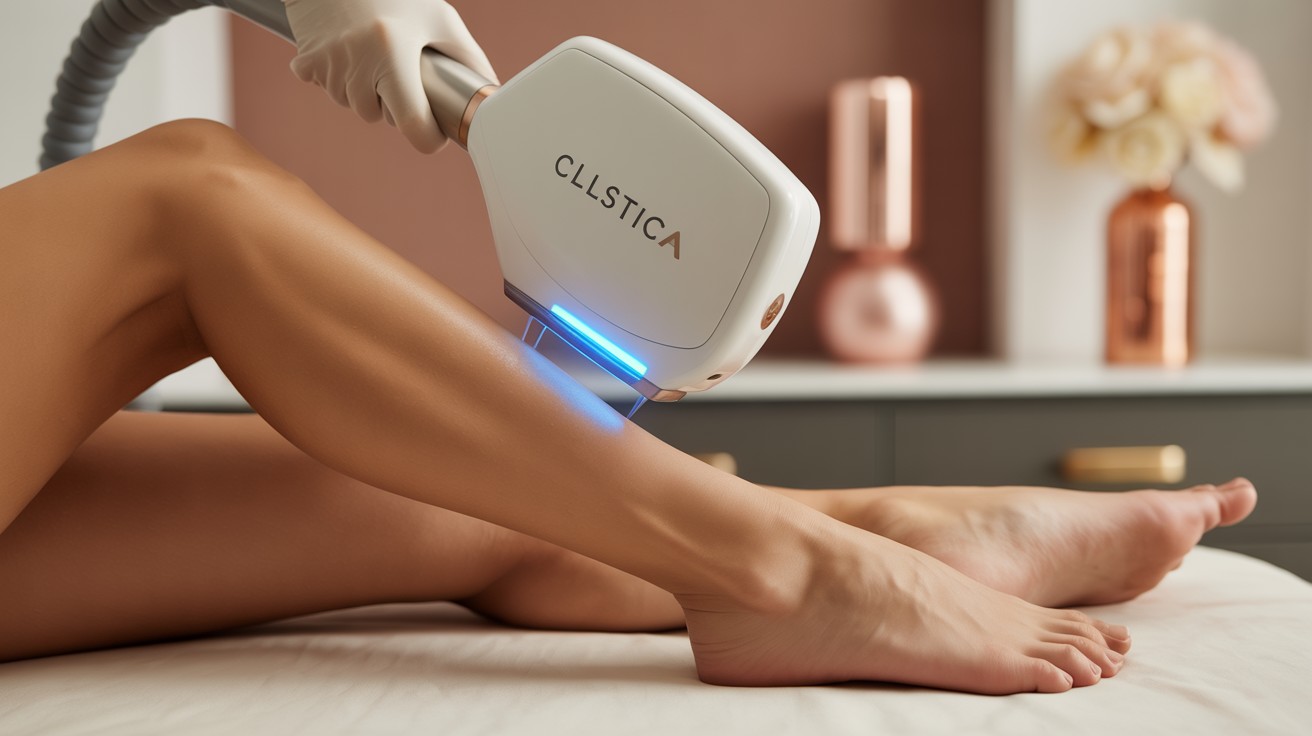
Choosing the best laser for laser hair removal isn't as simple as picking the most expensive option or the one with the best marketing. The ideal laser depends on your skin tone, hair color, treatment area, and comfort preferences. At Gentle Revive, we use multiple laser platforms to ensure every patient gets optimal results.
Alexandrite (755 nm): Fast Results for Light to Medium Skin
The Alexandrite laser operates at 755nm wavelength and is considered the gold standard for treating light to medium skin tones (Fitzpatrick I-III). Its shorter wavelength allows for rapid treatment of large areas while effectively targeting the melanin in hair follicles.
How It Works and Why It's Fast
The 755nm wavelength is highly absorbed by melanin in hair follicles, making it extremely effective at destroying the follicle while minimizing damage to surrounding tissue. Treatment sessions are typically faster than other laser types, making it ideal for large areas like legs and backs.
Ideal Candidates and Body Areas
Alexandrite lasers work best on individuals with light skin and dark hair. They're excellent for treating legs, arms, underarms, and bikini areas. However, they're not recommended for darker skin tones due to increased risk of pigmentation changes.
Diode (800-810 nm): The Versatile Workhorse
Diode lasers offer exceptional versatility, treating a broader range of skin tones than Alexandrite while maintaining excellent efficacy. The 800-810nm wavelength penetrates deeper into the skin, effectively targeting hair follicles while protecting the epidermis.
Want clearer, healthier skin?
Book a free skin analysis and let our team recommend the best treatment plan for your concerns.
Skin Types It Serves Best (Fitzpatrick I-IV)
Diode lasers safely treat skin types I through IV, making them suitable for most patients who walk through our doors. With proper settings and cooling, they can even treat some type V skin tones under careful supervision.
Precision, Penetration, and Hair Thickness
The deeper penetration of diode lasers makes them particularly effective for coarse, thick hair. They're excellent for treating stubborn areas like the bikini line, underarms, and men's backs where hair tends to be denser.
Nd:YAG (1064 nm): The Safest Choice for Dark Skin
The Nd:YAG laser's 1064nm wavelength is the longest commonly used for hair removal, making it the safest option for darker skin tones (Fitzpatrick V-VI). This wavelength bypasses melanin in the epidermis while still effectively targeting hair follicles.
Why 1064 nm Protects Melanin-Rich Skin
By using a longer wavelength, Nd:YAG lasers minimize absorption by epidermal melanin, dramatically reducing the risk of burns, hyperpigmentation, and hypopigmentation in darker skin. This makes professional laser hair removal accessible to patients who were previously told they weren't candidates.
What Really Makes a Laser "Best": Provider Expertise
The best laser is only as good as the hands operating it. At Gentle Revive, our providers have extensive training on multiple platforms and perform thorough skin assessments before every treatment. We adjust parameters based on your unique skin type, hair characteristics, and treatment history.
Personalized Settings for Optimal Results
We customize fluence, pulse width, spot size, and cooling for each patient and each treatment area. This personalized approach ensures maximum hair reduction while minimizing discomfort and side effects.
About This Article

Dr. Steven Cherrington, DO
Board-Certified Osteopathic Physician • Medical Director, Gentle Revive • Fellow, American Academy of Anti-Aging Medicine
Dr. Steven Cherrington is a Board-Certified Osteopathic Physician and Medical Director at Gentle Revive. With over 15 years of experience in regenerative and aesthetic medicine, Dr. Cherrington specializes in helping patients achieve natural, lasting results through evidence-based treatments.
Editorial Process: Initial content ideas and drafts may be generated with the assistance of AI language models. Every article is then thoroughly reviewed, edited, and medically verified by our clinical team before publication to ensure accuracy, relevance, and alignment with current medical standards.
This content is for informational purposes only and does not constitute medical advice. Always consult with a qualified healthcare provider for personalized guidance.