Tattoos are designed to last forever. The ink is injected into the dermis—the second layer of skin—where particles are too large for your immune system to remove. That's why tattoos stay put for decades.
Laser tattoo removal works by changing that equation.
The Physics of Laser Removal
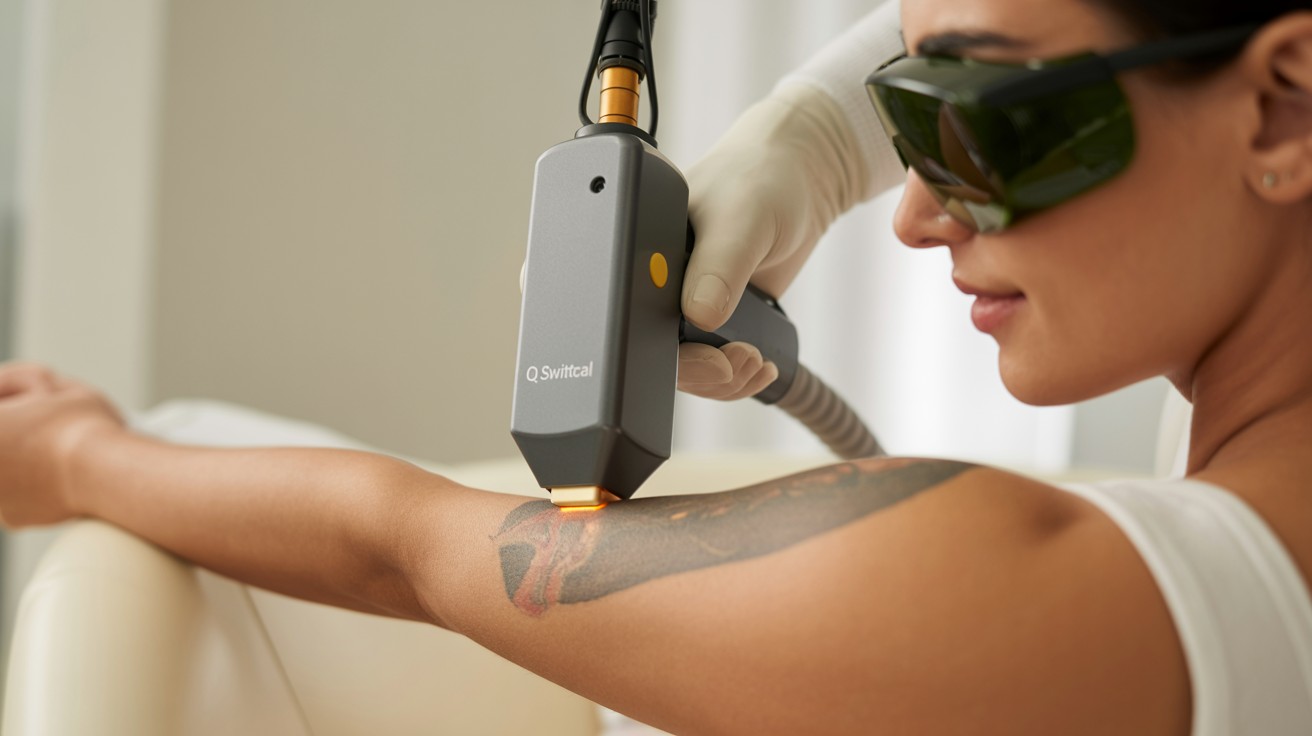
When laser light hits tattoo ink, it's absorbed by the pigment particles, causing them to heat up rapidly. In nanoseconds or picoseconds (billionths or trillionths of a second), that energy shatters the large ink particles into fragments small enough for your body to process.
The Concrete Analogy
Think of your tattoo as a slab of concrete beneath your skin—too massive for your body to move. The laser breaks that slab into gravel (with older technology) or dust (with modern picosecond lasers). Your lymphatic system then carries these smaller particles away as waste.
Why Different Lasers for Different Colors
Different ink colors absorb different wavelengths of light. This is why professional tattoo removal often requires multiple laser types:
- 1064nm (Nd:YAG): Best for black, dark blue, and dark green inks
- 755nm (Alexandrite): Effective for blue and green inks
- 532nm (KTP): Targets red, orange, and yellow inks
At Gentle Revive, we use PicoSure—a 755nm picosecond laser that removes tattoos in fewer treatments than older technology. It's particularly effective for stubborn colors like blues and greens that resist standard Q-switched lasers.
Want clearer, healthier skin?
Book a free skin analysis and let our team recommend the best treatment plan for your concerns.
What Happens During Treatment
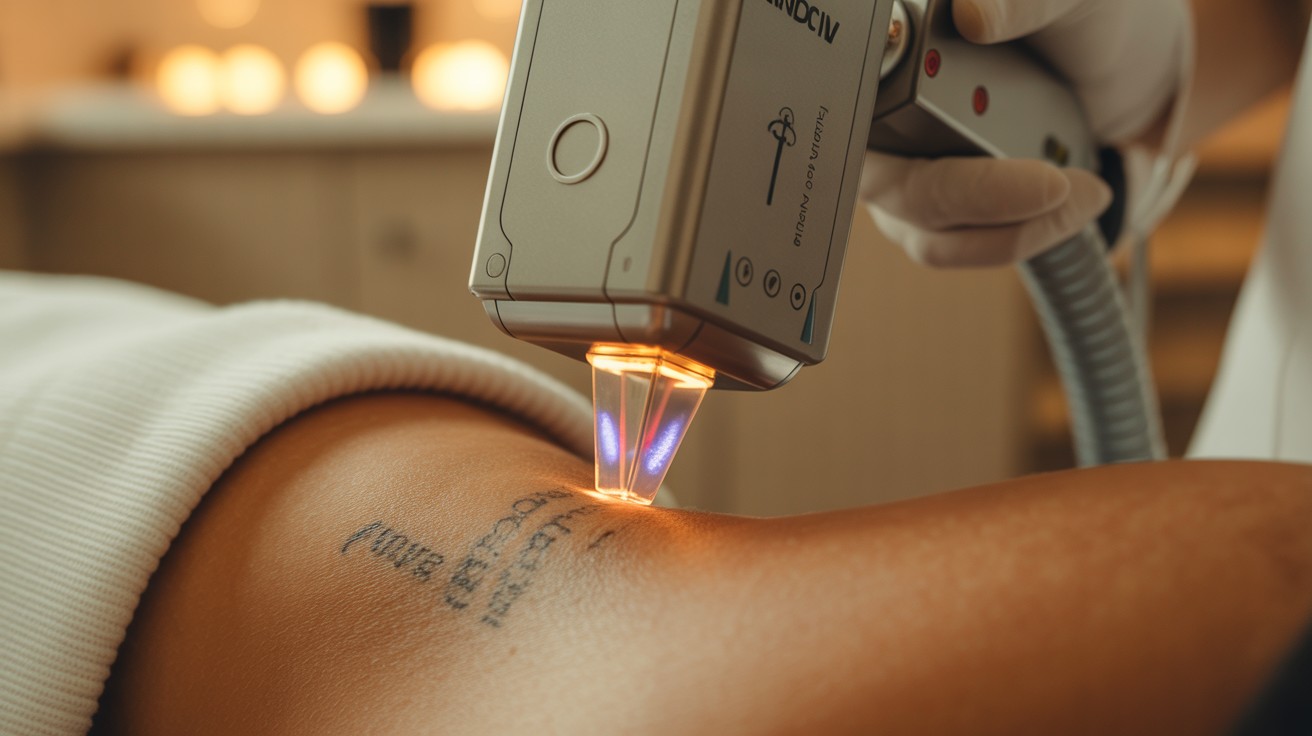
The laser handpiece passes over your tattoo, delivering rapid pulses of light. You'll see immediate "frosting"—a white appearance as gas is released from the rapid heating. This fades within minutes.
Managing Comfort
We won't pretend it's painless. Most patients compare the sensation to a rubber band snap combined with heat. We use cold air, topical numbing, and when appropriate, nitrous oxide (dental gas) to maximize comfort.
First treatments often feel most intense because there's the most ink to target. Subsequent sessions become progressively easier.
The Healing Process
After treatment, the area may blister, scab, or feel tender—all normal responses. Your body is actively processing and eliminating shattered ink particles. This takes 6-8 weeks, which is why sessions are spaced accordingly.
Between Sessions
- Keep the area clean and protected
- Avoid sun exposure
- Don't pick at blisters or scabs
- Stay hydrated to support your lymphatic system
Timeline and Expectations
Most tattoos require 6-12 sessions for significant fading or complete removal. Amateur tattoos often clear faster (less ink, shallower placement). Professional tattoos take longer due to higher ink density and consistent depth.
Black ink typically responds best. Colors like turquoise, yellow, and white can be more challenging. During your assessment, we'll assess your specific tattoo and provide honest expectations.
Take the First Step
Curious whether your tattoo can be removed—or faded enough for a cover-up? Assessments are complimentary. We'll examine your ink, discuss your goals, and help you understand what's realistically achievable.
About This Article

Dr. Steven Cherrington, DO
Board-Certified Osteopathic Physician • Medical Director, Gentle Revive • Fellow, American Academy of Anti-Aging Medicine
Dr. Steven Cherrington is a Board-Certified Osteopathic Physician and Medical Director at Gentle Revive. With over 15 years of experience in regenerative and aesthetic medicine, Dr. Cherrington specializes in helping patients achieve natural, lasting results through evidence-based treatments.
Editorial Process: Initial content ideas and drafts may be generated with the assistance of AI language models. Every article is then thoroughly reviewed, edited, and medically verified by our clinical team before publication to ensure accuracy, relevance, and alignment with current medical standards.
This content is for informational purposes only and does not constitute medical advice. Always consult with a qualified healthcare provider for personalized guidance.